The Delivery Driver Whose Telematics Discount Vanished After a Single Hard Brake

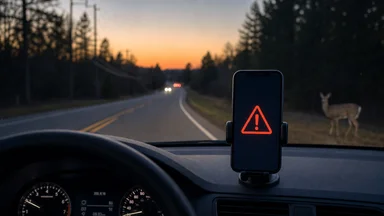
In early 2024, a delivery driver in Missouri signed up for a usage-based auto insurance policy from a carrier we'll call ShieldSure Mutual. The carrier advertised discounts of up to 30% for safe driving. After a month of clean telematics data, the discount appeared on the driver's bill. Then, on a single evening, a deer darted across a rural road in Boone County. The driver braked hard—a deceleration above 7 mph per second. The telematics device recorded it as a "hard brake" event. The next billing cycle, the discount vanished, and the premium jumped by roughly 40%. The driver filed a complaint with the Missouri Department of Insurance. This is the story of what happened, and what it reveals about the fine print of pay-how-you-drive policies.
The Promise of Pay-How-You-Drive
Usage-based insurance (UBI) has grown rapidly in the United States. By 2024, roughly 15% of auto insurers offered some form of telematics program, according to a 2024 survey by the National Association of Insurance Commissioners (NAIC). Carriers market these policies as a fairer way to price risk: instead of relying on age, credit score, and ZIP code, they measure actual driving behavior—speed, mileage, braking, cornering, and time of day. The promise is mutual: drivers who avoid risky behavior pay less, and insurers gain more accurate risk segmentation.
For gig-economy drivers, the appeal is obvious. Delivery drivers often log high mileage but may drive cautiously. A UBI policy that rewards low mileage and smooth driving can yield significant savings. In this case, the driver's policy offered a base discount of 10% for enrolling, with the potential to reach 30% after three months of clean data. The first month's data showed no hard braking, no rapid acceleration, and no late-night driving. The discount was applied.
But the fine print contained a clause that would prove costly. The policy defined "hard brake" as any deceleration exceeding 7 mph per second, measured by the device's accelerometer. It also stated that the discount was "conditional" and could be adjusted or removed at any time based on driving data. The driver, like many consumers, had not read the full policy terms. He later told the Missouri Department of Insurance that he assumed the discount was earned and would persist unless he accumulated multiple violations.
NAIC complaint data from 2024 shows that disputes over telematics discounts have risen roughly 20% since 2023, according to a 2024 NAIC report on consumer complaints. Most involve unexpected discount loss after isolated events. Consumer advocates argue that the algorithms lack transparency and that drivers are not adequately warned about the consequences of single events. Insurers counter that the models are actuarially sound and that the discount is a privilege, not a right.
One Hard Brake, One Discount Revoked
The hard brake event occurred on a Tuesday evening in February. The driver was making a delivery in a rural area of Boone County when a deer jumped onto the road. He slammed the brakes, the vehicle came to a controlled stop, and no collision occurred. The telematics device logged the event as a hard brake with a deceleration of 8.2 mph per second. The driver received no alert at the time. He continued his shift, completed the delivery, and thought nothing of it.
When the next billing cycle arrived, the discount was gone. The premium had increased from roughly $120 per month to $170 per month—a 42% jump. The driver called ShieldSure's customer service line. The representative explained that the hard brake event had triggered a reclassification of his risk profile. Under the policy terms, the discount was no longer applicable. The driver asked if he could appeal or take a defensive driving course to restore the discount. He was told there was no appeals process for telematics-based adjustments.
The driver then filed a formal complaint with the Missouri Department of Insurance. In the complaint, he stated that he had not been notified that a single event could result in a permanent discount loss. He argued that the hard brake was a necessary evasive maneuver, not a sign of aggressive driving. The Missouri Department of Insurance opened an investigation and requested the policy documents and telematics data from ShieldSure Mutual.
Similar cases have appeared in other states. A 2023 report from the Consumer Federation of America documented several instances where drivers lost discounts after single hard brakes or rapid accelerations. In one case, a driver lost a 25% discount after a single hard brake to avoid a child running into the street. Insurers typically defend these actions by citing the policy language and the need for consistent risk scoring. But critics say the lack of context—such as whether the brake was a response to a hazard—makes the system unfair.
How Telematics Contracts Define 'Hard Brake'
The threshold for a hard brake varies by insurer, but a common cutoff is deceleration above 7 mph per second. Some insurers use 8 mph per second, while others use a more sensitive 6 mph per second. The device samples acceleration at a rate of several times per second, and any spike above the threshold is recorded as an event. The ShieldSure policy defined hard brake as "any deceleration exceeding 7 mph per second, as measured by the device's accelerometer." No exception was made for emergency maneuvers.
The fine print also allowed the insurer to adjust or remove the discount "at any time, based on driving data collected during the policy period." This meant that a single event could retroactively affect the discount for the entire policy term. The driver's discount was removed for the remaining months of the six-month policy. He could not cancel mid-term without a penalty, and he could not opt out of telematics without switching to a standard policy, which would have been more expensive.
AM Best, the credit rating agency, has flagged transparency gaps in telematics programs. In a 2024 report, AM Best noted that many insurers do not clearly disclose how driving events are scored or how discounts can be lost. The report recommended that insurers provide real-time feedback to drivers and offer a grace period for isolated events. Few carriers have adopted these recommendations voluntarily.
Some states have begun to address the issue. California and Oregon require insurers to provide a clear explanation of how telematics data affects premiums. But most states have no specific rules for UBI disclosure. The NAIC has issued model guidelines, but adoption is voluntary. Missouri, where the driver lived, had not adopted any telematics-specific disclosure rules as of 2024.
The Cat-and-Mouse of Usage-Based Scoring
Telematics scoring creates a cat-and-mouse dynamic between drivers and insurers. Drivers quickly learn that smooth driving—coasting to stops, gradual acceleration, avoiding hard turns—yields better scores. Some drivers modify their behavior genuinely. Others try to game the system: unplugging the device, driving aggressively when the device is not recording, or using multiple devices to confuse the data. Insurers respond by updating algorithms to detect tampering, such as sudden gaps in data or inconsistent driving patterns.
For delivery drivers, the challenge is structural. Delivery routes inherently involve frequent stops, tight turns, and sudden braking to avoid pedestrians or obstacles. A driver who makes 30 deliveries per shift will inevitably have more braking events than a commuter who drives the same route each day. Yet many telematics programs do not adjust for driving context. The same hard brake threshold applies to both drivers.
SIU analysts—special investigative unit professionals—have begun to see patterns of staged soft-braking in fraud cases. Some drivers deliberately brake gently before a stop to keep scores low, even if it means coasting through intersections. Others have filed false complaints claiming that hard brake events were caused by road hazards when they were actually due to aggressive driving. Insurers must balance fraud detection with legitimate claims of unfair scoring.
The divergence between real risk and scored risk is particularly acute for gig workers. A delivery driver who brakes hard to avoid a collision is actually reducing risk, but the telematics algorithm penalizes the behavior. Some researchers have proposed that insurers should incorporate contextual data—such as GPS location, time of day, and weather—to distinguish between evasive and aggressive braking. So far, few carriers have implemented such features.
Another dimension of the cat-and-mouse is the use of second-by-second data versus trip-level scoring. Some insurers score each trip independently, so a single bad trip can drag down the overall score even if the rest of the month is flawless. Others use a rolling average, which dilutes the impact of isolated events. The ShieldSure policy used a cumulative score that reset only at each six-month renewal, meaning one hard brake could affect the discount for the entire policy term. Drivers often do not realize this until it is too late.
The gaming of telematics is not limited to individual drivers. Organized fraud rings have been known to install devices in vehicles that are driven only on smooth, low-risk routes, while the actual insured vehicle is used for high-risk driving. Insurers have responded with device pairing requirements and GPS cross-checks. But these measures increase costs and can inconvenience legitimate policyholders. The tension between security and usability is a constant challenge for UBI programs.
What the Complaint Records Reveal
The NAIC's Consumer Complaint Database allows researchers to track trends in insurance disputes. As of mid-2025, the database contained roughly 1,200 complaints related to telematics discount removal, up from about 1,000 in 2023, according to a 2025 NAIC data summary. The majority involved personal auto policies, but a growing share came from commercial fleet and ride-share drivers. The most common complaint: the discount was removed after a single event, and the driver was not given an opportunity to appeal. The increase reflects both the growing adoption of telematics and the persistent dissatisfaction with how isolated events are handled.
In the driver's case, the Missouri Department of Insurance reviewed the policy language and the telematics data. The department found that ShieldSure had complied with the policy terms, but it also noted that the terms were ambiguous regarding the definition of "hard brake" and the conditions for discount removal. The department recommended that ShieldSure offer a one-time reinstatement of the discount for isolated events. The insurer agreed to a partial premium refund of roughly $150, but the discount was not restored.
Consumer advocates argue that the NAIC should require insurers to disclose the specific thresholds and scoring algorithms in plain language. They also call for a mandatory appeals process for disputed events. Insurers push back, arguing that proprietary algorithms are trade secrets and that a mandatory appeals process would increase costs for all policyholders. The tension between transparency and proprietary risk scoring remains unresolved.
Some insurers have voluntarily improved their programs. Progressive's Snapshot program, for example, gives drivers a score and provides feedback on specific events. Allstate's Drivewise offers a discount for enrollment and does not penalize isolated hard brakes. But these are exceptions. Many UBI programs still operate on an all-or-nothing basis: the discount is present or it is gone, with no middle ground.
The Missouri case also highlights a gap in regulatory oversight. While the Missouri Department of Insurance can mediate complaints, it lacks the authority to mandate changes to proprietary scoring algorithms. The state's insurance code does not specifically address telematics, leaving consumers with limited recourse beyond switching carriers. Some consumer groups have called for legislation requiring insurers to offer a grace period or a warning before removing a discount, but no such bill has passed in Missouri as of 2025.
Policy Language That Traps the Unwary
The policy language in the driver's contract is typical of many telematics programs. The discount is labeled as "conditional" in the base policy, meaning it is not guaranteed. The renewal terms can change based on driving data, so a driver who loses a discount may not get it back at renewal. Opt-out provisions often require the driver to cancel the policy entirely and find a new carrier, which can be costly and time-consuming.
A 2024 report from the National Association of Insurance Commissioners (NAIC) recommended that insurers use clearer language in telematics policies. Specifically, the report suggested that policies should state: "Your discount may be reduced or removed if your driving data shows hard braking, rapid acceleration, or other risky behavior. A single event may affect your discount." Some states have adopted this language, but many have not. Missouri has not adopted any specific disclosure requirements for telematics.
Similar clauses appear in commercial fleet policies. A delivery company that uses telematics to monitor its drivers may face the same issue: a single hard brake by one driver can trigger a premium increase for the entire fleet. The cost is passed down to the driver through chargebacks or reduced bonuses. The mechanism is the same, but the stakes are higher.
The driver in this case eventually switched to a standard policy with a different carrier. He now pays roughly $140 per month—less than the post-discount premium but more than the original discounted rate. He told the Missouri Department of Insurance that he would have preferred a system that gave him a warning or a grace period. "I would have taken a defensive driving course if I knew one brake could cost me that much," he said. The department's report concluded that while the insurer acted within its contractual rights, the lack of transparency was a consumer protection concern.
As telematics adoption grows—some projections suggest 40% of auto policies will be usage-based by 2030—the tension between actuarial precision and consumer fairness will only intensify. Insurers have a legitimate interest in accurate risk scoring. But the current system, which can penalize a single evasive maneuver as harshly as a pattern of aggressive driving, creates misaligned expectations. The driver's story is not an outlier; it is a case study of a product that promises savings but delivers surprises.
For gig-economy workers, the lesson is clear: read the fine print, understand that a single hard brake can undo months of savings, and consider whether a telematics policy is truly suited to the demands of delivery driving. Insurers, meanwhile, face a choice: refine their algorithms to account for context, or risk a regulatory backlash that could mandate changes far more sweeping than those they might implement voluntarily.
Conclusion
The case of the Missouri delivery driver illustrates the pitfalls of usage-based insurance when fine print meets real-world driving. A single evasive maneuver—one that likely prevented an accident—cost him a 30% discount and a 42% premium increase. The insurer acted within its contractual rights, but the lack of transparency and the absence of an appeals process left the driver feeling cheated. As telematics becomes more common, the industry must grapple with the tension between algorithmic precision and human context. For now, the burden falls on drivers to understand the rules of the game—and on regulators to ensure those rules are fair.